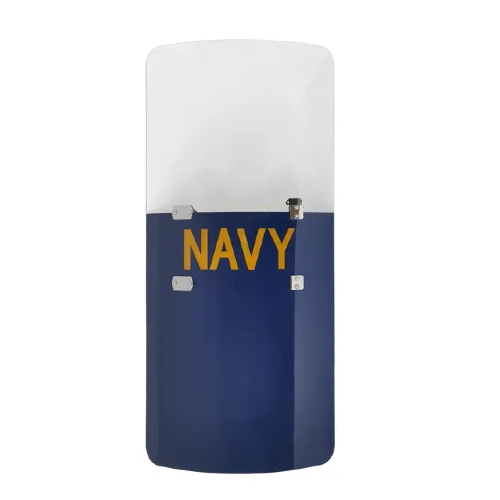
Understanding Riot Shields
When public order and safety are at risk, riot shields become one of the most recognizable and essential tools in law enforcement and security operations. Used by police, military units, and private security agencies, these shields provide a reliable line of defense during protests, riots, and tactical missions.
Unlike traditional ballistic shields, which are designed to stop bullets, riot shields are primarily used to protect against blunt force, thrown projectiles, and edged weapons. Their effectiveness depends heavily on their material construction, which determines how much force the shield can absorb without cracking or deforming.
The design of a modern riot shield must balance protection, mobility, and visibility. Officers often carry these shields for long hours, requiring them to be lightweight yet durable, transparent yet strong. Understanding the materials used helps explain why certain shields dominate the market — and why innovations in polymer technology continue to shape the future of protective gear.
Key Requirements for Riot Shield Materials
The materials used in riot shield manufacturing must meet strict standards defined by international testing agencies such as NIJ (National Institute of Justice) and EN standards (European Norms). These criteria ensure consistent quality and performance during real-world encounters.
1. Impact Resistance
A riot shield must withstand repeated strikes from objects such as stones, bricks, baseball bats, or metal rods. Impact resistance is measured in joules — a standard unit of energy — to determine how much force the material can endure before failure. A high-grade polycarbonate riot shield, for instance, can resist impacts exceeding 200–300 joules, enough to deflect a heavy blow from close range.
2. Lightweight Design
Mobility is essential. Shields used in crowd dispersal or close-quarter operations must allow the user to move quickly, retreat safely, or form a defense line. This makes materials like polycarbonate and HDPE highly preferred over metals. A standard full-size riot shield weighs around 3.5–5 kilograms, depending on design and accessories such as handles, visors, or rubber edges.
3. Durability and Scratch Resistance
Riot shields face not only physical attacks but also abrasion, UV radiation, and extreme temperatures. Transparent shields require surface coatings that resist scratches to maintain visibility. Premium shields often come with hard coatings or anti-fog layers to prevent visual distortion during extended operations.
4. Transparency or Visual Clarity
Transparency provides tactical superiority. Officers can observe crowd behavior, identify threats, and communicate visually while remaining protected. For this reason, optical-grade polycarbonate is often used, as it maintains excellent light transmission while providing ballistic-level impact strength.
Common Materials Used in Riot Shields
Different materials are chosen depending on the level of protection, visibility, and cost requirements. Here’s a detailed look at the most commonly used materials in riot shield production:
Material | Key Properties | Advantages | Limitations |
Polycarbonate (PC) | Transparent, high impact resistance, heat stable | Lightweight, shatterproof, UV resistant | May scratch without surface coating |
High-Density Polyethylene (HDPE) | Opaque, flexible, high toughness | Cost-effective, weather-resistant | No transparency, moderate impact resistance |
Acrylic (PMMA) | Transparent, rigid | Superior clarity, UV stable | Brittle under repeated impact |
Metal Alloys (Aluminum/Steel) | Extremely high strength | Excellent ballistic protection | Heavy, less maneuverable |
Composite Materials (Hybrid) | Layered fibers + resin matrix | High customization, balanced weight | Complex and costly manufacturing |
Many modern riot control units prefer polycarbonate for full-transparency operations and HDPE for training or opaque shield requirements. Hybrid materials are now used for elite tactical forces that demand both protection and lightweight performance.
Polycarbonate: The Most Popular Material for Riot Shields
What Is Polycarbonate?
Polycarbonate (PC) is an amorphous thermoplastic polymer known for its toughness, impact strength, and clarity. It’s one of the most durable plastics available, offering exceptional dimensional stability even when exposed to intense physical stress.
It is widely used not only in riot shields but also in aircraft windows, safety helmets, and bulletproof glass laminates, demonstrating its versatility and resilience under pressure.
Why Polycarbonate Dominates the Market
Unmatched Strength and Impact Resistance
Polycarbonate absorbs and disperses energy effectively. It doesn’t crack like acrylic or deform easily like polyethylene. The material can withstand multiple blows from a steel baton without breaking — a key reason it’s the global standard for riot protection gear.
Lightweight Construction
Compared to metal shields, polycarbonate versions are significantly lighter, reducing strain on the user. A lighter shield improves reaction time, endurance, and coordination, especially in fast-moving tactical situations.
Optical Clarity
Riot shields made from optical-grade PC allow officers to remain protected while maintaining full visibility. This transparency is vital for command and control, especially in coordinated formations.
Thermal and Weather Resistance
Polycarbonate performs exceptionally well in temperatures ranging from –40°C to 120°C, maintaining its strength across environments — from desert operations to arctic conditions.
Ease of Manufacturing and Customization
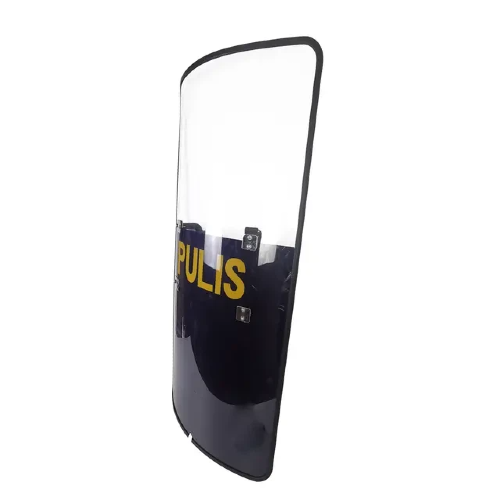
Polycarbonate can be vacuum-formed, CNC-cut, or thermo-molded into ergonomic designs. It supports accessories like grip handles, straps, logos, and reinforced borders.
Long-Term Cost Efficiency
While slightly more expensive initially, polycarbonate riot shields offer longer service life and lower replacement costs due to their resilience and repairability.
HDPE: A Reliable Alternative Material
What Is High-Density Polyethylene?
HDPE is a thermoplastic polymer made from petroleum. Known for its high strength-to-density ratio, HDPE offers a good compromise between toughness and flexibility. It’s commonly used for riot shields, helmets, and batons where visibility is less important.
Advantages of HDPE Shields
Excellent impact absorption, making them ideal for training or riot containment.
Corrosion-resistant, unaffected by moisture or chemical exposure.
Cost-effective for bulk procurement.
Customizable colors — commonly black or blue for police and security forces.
Drawbacks
HDPE shields are non-transparent, limiting situational awareness. Their surface may also show more wear over time compared to coated polycarbonate. However, many security units still use HDPE shields for non-visual operations, where durability and affordability matter more than visibility.
Metal and Composite Riot Shields: Heavy-Duty Protection
Metal Riot Shields
Steel and aluminum alloys are occasionally used for ballistic or anti-fragmentation shields, designed for high-risk missions. These shields can stop low-caliber projectiles and withstand heavy impacts, making them suitable for military applications or high-threat law enforcement units.
However, at 10–15 kg each, metal shields significantly restrict movement, making them impractical for general riot control.
Composite Riot Shields
Composite shields combine polymer resins with reinforcing fibers such as Kevlar®, aramid, or carbon fiber. These materials are engineered to deliver superior protection at reduced weight. They often feature multi-layer structures, with hard outer layers to deflect blows and inner layers to absorb energy.
Composite shields are more expensive but are gaining popularity in special forces and tactical response units due to their customizable balance of transparency, flexibility, and resistance.
Factors Influencing Riot Shield Material Choice
1. Operational Environment
Environmental factors such as temperature, humidity, and exposure to chemicals or UV light can affect performance. For instance, polycarbonate’s UV resistance makes it ideal for outdoor crowd control, while HDPE performs well in training academies or non-lethal scenarios.
2. Threat Level
Low-threat scenarios (e.g., peaceful protests) require lightweight shields with wide visibility. In contrast, high-threat missions might require hybrid or metal-reinforced shields capable of withstanding ballistic fragments or aggressive impacts.
3. Weight vs. Protection Balance
This balance defines usability. Riot control units prefer shields that are light enough to be held for hours without sacrificing safety. That’s why polycarbonate — offering both toughness and lightness — remains the standard.
4. Cost Considerations
Budget allocation often determines material choice. For large-scale procurement, HDPE offers affordability. However, polycarbonate shields, though pricier, are often more cost-effective in long-term use due to superior durability.
Innovations and Future Trends in Riot Shield Materials
Technological advances are driving the next generation of riot shields toward enhanced protection, reduced weight, and multi-functionality.
1. Multi-Layer Composite Systems
New designs use laminated materials — combining transparent polycarbonate layers with impact-absorbing cores made from Kevlar or glass fiber. This configuration improves both protection and durability.
2. Advanced Surface Coatings
Next-gen shields now feature anti-fog, anti-scratch, and UV-resistant nano-coatings that maintain clarity and reduce maintenance costs. Some coatings even incorporate hydrophobic properties, preventing liquid-based attacks from sticking to the surface.
3. Lightweight Reinforcements
By introducing carbon nanotube composites and honeycomb core structures, manufacturers are achieving shields that are 25% lighter without compromising safety.
4. Integration of Digital Components
Prototype riot shields already include built-in LED lights, body cameras, and communication modules, allowing better coordination and real-time situational monitoring during operations.
5. Sustainability and Recycling
As environmental concerns grow, more manufacturers are adopting recyclable thermoplastics and eco-friendly manufacturing processes, ensuring long-term sustainability in defense production.
Maintenance and Longevity of Riot Shields
Proper maintenance ensures a shield retains its protective capabilities for years:
Routine Inspections — Examine for surface cracks, warping, or delamination. Replace shields that show signs of damage.
Cleaning Protocols — Use mild detergents and a soft cloth; harsh chemicals can degrade coatings.
Storage Conditions — Avoid prolonged exposure to sunlight or extreme heat. Hang or stack shields to prevent bending.
Handle and Grip Maintenance — Check for loose bolts or worn straps; ensure comfortable handling during long missions.
Re-Coating and Repairs — Some manufacturers offer re-coating services to restore anti-scratch and anti-fog properties.
Comparison Summary: Which Material Is Best?
Category | Polycarbonate | HDPE | Metal Alloy | Composite |
Transparency | Excellent | Opaque | Limited | Variable |
Impact Resistance | Very High | Moderate | Extreme | Very High |
Weight | Light | Medium | Heavy | Light–Medium |
Durability | Excellent | Good | Excellent | Excellent |
Maintenance | Easy | Moderate | Difficult | Moderate |
Cost Efficiency | High (long-term) | Very High | Low | Medium |
Common Use | Police, riot control | Training, security | Military | Tactical, elite units |
Conclusion
The primary material used in modern riot shields is polycarbonate, valued for its superior impact resistance, clarity, and lightweight design. This makes it the top choice for law enforcement and tactical units worldwide, ensuring both visibility and dependable protection in high-pressure environments. Meanwhile, HDPE, metal alloys, and composite materials are also utilized in specific applications—from affordable training gear to advanced tactical defense equipment.
As innovation in material technology advances, riot shields are becoming even more durable, ergonomic, and intelligent. For those seeking reliable, high-performance riot shields, Jiangsu Crown Supplies Co., Ltd. stands out as a trusted manufacturer with deep expertise in protective equipment. Their extensive product range, strict quality standards, and customization capabilities make them a preferred partner for security and defense organizations globally. To learn more or discuss tailored solutions, we highly recommend contacting Jiangsu Crown Supplies Co., Ltd. for professional guidance and support.


